Government of IndiaGOVERNMENT OF INDIA
मुख्य सामग्री छोड़ें
हिन्दी language
Accessibility
Accessibility Tools
Color Adjustment
Text Size
Navigation Adjustment
Screen Reader iconScreen Reader
MyGov Twitter
MyGov Facebook
MyGov Youtube
MyGov Instagram
MyGov Linkedin
MyGov Whatsapp
Meri Sarkar Logo

Recent Searches

      Close

      शामिल हों

      • समूह
      • कार्य
      • चर्चा करें
      • जनमत/सर्वेक्षण
      • ब्लॉग
      • वार्ता
      • क्विज़
      • MG प्राइम
      • अभियान
      • शपथ
      • पॉडकास्ट
      • मीडिया
      • पत्रिकाएँ

      माईगव राज्य

      • अंडमान-निकोबार द्वीप समूह
      • अरूणाचल प्रदेश
      • असम
      • चंडीगढ़
      • छत्तीसगढ़
      • दादरा और नगर हवेली और दमन और दीव
      • गोवा
      • गुजरात
      • हरियाणा
      • हिमाचल प्रदेश
      • जम्मू और कश्मीर
      • झारखण्‍ड
      • कर्नाटक
      • लद्दाख
      • मध्‍य प्रदेश
      • महाराष्ट्र
      • मणिपुर
      • मिजोरम
      • नागालैण्‍ड
      • राजस्थान
      • तमिलनाडु
      • त्रिपुरा
      • उत्तर प्रदेश
      • उत्तराखंड
      • लक्षद्वीप
      • ओडिशा
      • पुडुचेरी
      • सिक्किम

      माइक्रोसाइट्स

      • ब्लॉग
      • कैंपस
      • इनोवेट इंडिया
      • शपथ
      • क्विज़
      • साथी
      • सेल्फ4सोसायटी
      • ट्रांसफॉर्मिंग इंडिया
      • PM इवेंट्स

      जानें

      • माईगव: अवलोकन
      • माईगव से संबद्ध करें
      • माईगव के साथ काम करें
      • सर्कुलर
      • पल्स न्यूजलेटर
      • टेंडर्स
      • साप्ताहिक समाचार पत्र
      • Meity डैशबोर्ड
      • सेक्टर्स
      • कौशल
      • रूचि के क्षेत्र
      • आयु वर्ग
      • राष्ट्रीय कार्यक्रम
      • आर्काइव साइट्स

      मदद/प्रतिक्रिया

      • संपर्क करें
      • FAQ
      • प्रतिक्रिया
      • मदद
      • हमसे जुड़ें
      • सार्वजनिक शिकायत
      • साइट मैप
      • नियम एवं शर्तें
      • आधार का इस्तेमाल
      • वेब सूचना प्रबंधक
      • ICC
      • MyGov सोशल
      • पॉइंट्स और बैज्स
      • वेबसाइट की पॉलिसी
      user-profile
      Together, Let's Engage In Good Governance 
      Login/Register
      1. Home
      2. Discuss
      3. Inviting Ideas for Next Phase of Rural Sanitation

      Inviting Ideas for Next Phase of Rural Sanitation

      Facebook X
      Inviting Ideas for Next Phase of Rural Sanitation
      Start Date 01/08/2026 - 11:49
      End Date 02/10/2026 - 23:45
      Time zone: IST (GMT +5.30 Hrs)
      Login to Participate
      Sector:
      Water & Sanitation
      Created : 1/08/2026
      256
      Total Comments
      168
      Users Participated

      In the last 12 years, SBM(G) has evolved from a sanitation programme into a nationwide movement that has improved public health, enhanced dignity of women, empowered communities and promoted sustainable rural development. Building on the achievement of Open Defecation Free (ODF) status, SBM(G) 2.0 has expanded its focus to sustaining sanitation outcomes through interventions such as Individual Household Latrines (IHHLs), Community Sanitary Complexes (CSCs), Solid and Liquid Waste Management, Plastic Waste Management, Faecal Sludge Management, GOBARdhan, Information, Education and Communication (IEC) and Capacity Building. The current phase of the Mission is scheduled to conclude in March 2027.

      As the Department prepares the roadmap for the next phase of rural sanitation, it seeks ideas from citizens to sustain and strengthen the gains achieved under SBM(G) while addressing emerging challenges related to waste management, resource recovery, environmental sustainability, Operation & Maintenance (O&M) and long-term community ownership of assets and outcomes. Innovative, practical and scalable solutions are required to enhance sanitation service delivery, strengthen waste management systems, promote behavioural change and accelerate the transition towards a circular waste-to-wealth economy. Given that the diversities of rural areas from urban cities, suggestions and ideas, specific to rural scenarios will be highly appreciated. Along with these, with peri-urban areas / villages also growing fast and having characteristics of urban centers, solutions specific for such areas are also being sought.

      The success of SBM(G) has been driven by the spirit of Jan Bhagidari (People's Participation). Citizens, Gram Panchayats, SHGs, youth, Swachhagrahis and other stakeholders have been at the forefront of transforming rural sanitation and their continued participation will remain critical for sustaining these achievements. 

      Accordingly, the Department of Drinking Water and Sanitation (DDWS), Ministry of Jal Shakti in collaboration with MyGov, invites citizens, youth, Gram Panchayats, SHGs, academic and research institutions, development partners and other stakeholders to share their suggestions and ideas for the next phase of rural sanitation programme on the following:

      1. Areas to be taken up (including existing areas where gaps may be remaining)
      2. New technological interventions for SWM, GWM, FSM.
      3. Rural Sanitation 
      4. Solutions for treating pollution in small nallahs/rivulets discharging into rivers in rural areas.
      5. Adoption of solutions based on traditional knowledge and ancient wisdom in new settings for rural India. 
      6. Any other area related to the programme.

      The suggestions received will help and guide the next phase of SBM(G) and contribute to building cleaner, healthier and environmentally sustainable villages that will be strong contributors for achieving the goal of Viksit Bharat@2047.

      Participation Guidelines 

      1. All Citizens, youth (including students), Gram Panchayats & SHGs, academic and research institutions, development partners, NGOs and other stakeholders are invited to contribute ideas for shaping the next phase of rural sanitation and solid-liquid waste management under Swachh Bharat Mission (Grameen).
      2. For detailed information about SBM(G) Phase II, applicants may visit the SBM(G) Phase II operational guidelines available on website of the Department (https://swachhbharatmission.ddws.gov.in). The guidelines can also be assessed through: https://swachhbharatmission.ddws.gov.in/sites/default/files/Guidelines/SBMG%20Phase-II%20Operational%20Guidelines.pdf 
      3. Suggestions may be submitted on any of the major components of SBM(G), including Individual Household Latrines (IHHLs), Community Sanitary Complexes (CSCs), Solid Waste Management, Liquid Waste Management, Plastic Waste Management, GOBARdhan, Faecal Sludge Management, Information, Education and Communication (IEC) and Capacity Building. Global best practices forming the bases of solution, may also duly mentioned and referred.
      4. Participants are encouraged to propose innovative, technology-driven, scientific, managerial, practical, feasible and scalable solutions to address rural sanitation challenges and strengthen long-term sustainability.
      5. Suggestions should focus on supporting the Department of Drinking Water and Sanitation (DDWS), Ministry of Jal Shakti, in developing the roadmap for the next phase of rural sanitation for India.
      6. Participants are required to register on the MyGov platform and submit their suggestions through the prescribed online form.

      SAUMEN KARMAKAR
      SAUMEN KARMAKAR
      3 days 18 hours ago

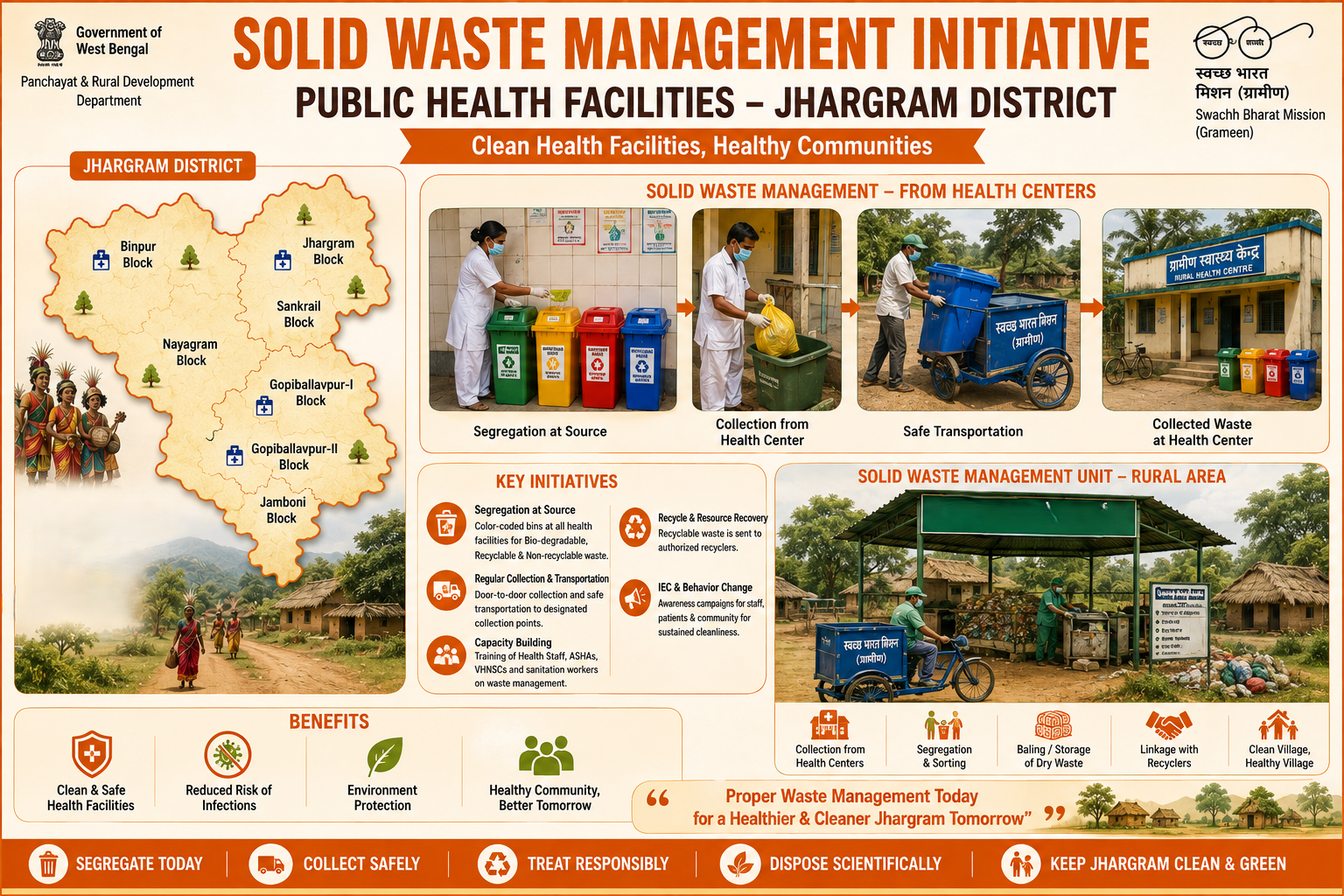
      The Integrated Solid Waste Management Unit (SWMU) under Swachh Bharat Mission (Grameen), in convergence with VBG–RAMG, is a Central Processing and Resource Recovery Hub that transforms rural waste into valuable resources. The unit receives segregated waste from households, institutions, and public health facilities for scientific segregation, composting, recycling, and bio-fertilizer production. The recovered resources support integrated livelihood activities such as goat rearing, piggery, fishery, GOBARdhan, vermicomposting, medicinal plants, sericulture, mushroom cultivation, nursery, plantation, and fodder production. This circular economy model promotes Waste to Wealth, generates employment, strengthens SHGs, enhances rural incomes, supports organic farming, protects the environment, and contributes to Clean Villages, Green Villages, and Atmanirbhar Gram.

      comments image 163322
      Like 1
      Dislike 0
      • Reply
      Facebook X
      Anubhav 17824
      Anubhav 17824
      3 days 21 hours ago

      Access to safe water and clean sanitation is a basic human right. Yet, millions of people worldwide lack these essential resources every single day. Clean water keeps our bodies healthy. Proper sanitation stops the spread of deadly diseases. Together, they form the foundation of a safe, stable, and thriving society. Without them, communities struggle to break the cycle of poverty and poor health.The Global Crisis of Clean WaterWater covers most of the Earth. But only a tiny fraction is fresh and safe for us to drink. Many regions face severe water scarcity. Rivers dry up, and underground water levels drop too low.Scarcity: Climate change and high demand drain natural water sources.Pollution: Factories and farms dump dangerous waste into local rivers.Distance: Women and children walk miles each day just to fetch dirty water.The Role of Proper SanitationSanitation means having a safe place to go to the bathroom. It also means managing waste so it does not harm public health. Open defects

      Like 1
      Dislike 1
      • Reply
      Facebook X
      anjanavb_4
      anjanavb_4
      3 days 22 hours ago

      The proposed revisions to SBM (Grameen) are timely and practical. Increasing financial assistance for IHHLs, community sanitation complexes, septage management, decentralized STPs, household composting, plastic waste management, and O&M will strengthen sanitation outcomes. It is also suggested to provide dedicated capacity building, technical support, and regular monitoring to ensure effective implementation and long-term sustainability.

      (1.15 MB)
      Like 1
      Dislike 0
      • Reply
      Facebook X
      h narayanaswamy
      h narayanaswamy
      3 days 22 hours ago

      W/o:huchappa..#327.(old.no-217) adigondanahalliBangalore muthanallur anekal. Karnataka. 560099

      Like 1
      Dislike 0
      • Reply
      Facebook X
      Subhamsekharsahoo_1
      Subhamsekharsahoo
      3 days 23 hours ago

      TechSanskruti India is a cultural technology startup preserving India's heritage through AI, XR/VR/AR, Blockchain, IoT, and digital innovation. Our mission is to connect artisans, students, tourists, and global audiences through a unified platform offering authentic handicrafts, immersive cultural experiences, AI-powered recommendations, digital storytelling, and skill development. Every product will have QR and blockchain-based authentication to ensure transparency and preserve its cultural identity. We will establish Experience & Innovation Centers featuring virtual heritage tours, digital museums, craft workshops, and technology-enabled training. Our revenue model includes e-commerce, subscriptions, tourism experiences, education, corporate training, technology licensing, government partnerships, and franchises. Aligned with Startup India, Digital India, Skill India, Make in India, Vocal for Local, and Atmanirbhar Bharat, TechSanskruti India aims to make Indian culture globally.

      Like 2
      Dislike 0
      • Reply
      Facebook X
      Chandrasekaran_21
      Chandrasekaran_21
      3 days 23 hours ago

      please visit watsan.in/sanitation-solutions/ Discarded waste glass fibre has been converted into complete super structures and has been implemented in almost 100 rural villages and rural schools. this won award from petrochemicals ministry for using solid waste for converting it into useful toilets. Also STP treatment is made using desi cow urine and cowdung making indegenous inoculum and dissuading use if haroic or any acid for fecal treatment.

      Like 1
      Dislike 0
      • Reply
      Facebook X
      PatelDev_95
      PatelDev_95
      4 days 2 hours ago

      Swachh Gaon, Swasth Gaon (Clean Village, Healthy Village) Clean roads, toilets in every home, dustbins, and villagers cleaning together. From Open Defecation to Dignity Show the transformation from open defecation to proper toilet use and hygiene. Waste Segregation and Composting Display separate bins for wet and dry waste, compost pits, and organic farming. Safe Drinking Water & Handwashing A village with clean water supply, handwashing stations, and hygiene awareness. Plastic-Free Village Promote cloth bags, recycling, and community cleanliness drives. Rainwater Harvesting for Clean Villages Show rooftop rainwater collection and proper drainage systems. Healthy Village Through Community Participation Villagers, school children, and local leaders working together to keep the village clean. Swachh Bharat Mission in Rural India Highlight toilets, waste management, cleanliness, and improved public health.

      Like 2
      Dislike 0
      • Reply
      Facebook X
      smruti.tripathy@gmail.com
      Smruti Tripathy
      4 days 4 hours ago

      Now-a-days Rural Sanitation & Waste Management is essential part of rural areas. In the last 12 years SBM-G brings a great impact on Sanitation & waste management. There are good numbers of infrastructure developed in the rural areas for sustaining open defecation free status & Solid Liquid waste management. But there is long way to go for sustainable approach. It has been observed that lack of field personnel in the GPs/Villages for creating awareness & monitoring the activities. There is no dedicated personnel in GPs for sanitation purpose & Sanitation workers engaged in GPs not paid regularly and there is no mechanism for engagement of sanitation worker and payment of their remuneration. it has been observed that in most of the GPs the low cost & less no. of infrastructure has been created for solid & liquid waste management due to less funding/ budget for rural areas.So permanent position in District level, block level & GP level for WASH sector & more provision for O&M of assets

      Like 1
      Dislike 0
      • Reply
      Facebook X
      Deepak_728
      Deepak
      4 days 4 hours ago

      R/Sir, In my view, there is an urgent need for greater effort and action under the SBM-G scheme; consequently, the implementation of SBM-G Phase 3 by the Government of India has become essential. Therefore, I request you to consider this matter, as SBM-G Phase 3 is crucial for ensuring widespread sanitation at the rural level across every state in India, and I urge you to take the necessary steps to implement it effectively. The suggestions regarding Phase 3 of the SBM-G scheme—applicable to Haryana and the rest of India—are as follows: Deepak Kumar, Panipat. 9068881006

      Like 1
      Dislike 0
      • Reply
      Facebook X
      Deepak_728
      Deepak
      4 days 4 hours ago

      श्रीमान जी, मेरी नजर में एसबीएम-जी स्कीम के अन्तर्गत अब तक के अनुसार ओर अधिक मेहनत व कार्य करने की अति आवश्यकता है जिसके तहत भारत सरकार द्वारा एसबीएम-जी फेज 3 लागू किया जाना अति आवश्यक हो जाता है। अतः मेरा अनुरोध है कि कृपया भारत के प्रत्येक राज्य में ग्रामीण स्तर पर स्वच्छता को व्यापक रूप से लाने के लिए एसबीएम-जी फेज-3 बहूत ही महत्वपूर्ण है, कृपया इस ओर ध्यान देकर इसे पूरे राज्य में सूचारू करने का कष्ट करे हरियाणा में अथवा पुरे भारत में एसबीएम-जी स्कीम के फेज 3 मे साथ सलग्न सुझाव निम्न प्रकार से है। दीपक कुमार, पानीपत। 9068881006

      Like 1
      Dislike 0
      • Reply
      Facebook X
      • First page « पहला
      • Previous page ‹ पिछला
      • …
      • पृष्ठ 3
      • पृष्ठ 4
      • पृष्ठ 5
      • पृष्ठ 6
      • Current page 7
      • पृष्ठ 8
      • पृष्ठ 9
      • पृष्ठ 10
      • पृष्ठ 11
      • …
      • Next page अगला ›
      • Last page आखरी »
      Please Log In to submit a comment.
      शामिल हों
      • समूह
      • कार्य
      • चर्चा करें
      • ब्लॉग
      • जनमत/सर्वेक्षण
      • वार्ता
      • क्विज़
      • MG प्राइम
      • अभियान
      • शपथ
      • पॉडकास्ट
      • मीडिया
      • पत्रिकाएँ
      जानें
      • माईगव: अवलोकन
      • माईगव से संबद्ध करें
      • माईगव के साथ काम करें
      • सर्कुलर
      • पल्स न्यूजलेटर
      • टेंडर्स
      • साप्ताहिक समाचार पत्र
      • Meity डैशबोर्ड
      • सेक्टर्स
      • कौशल
      • रूचि के क्षेत्र
      • आयु वर्ग
      • राष्ट्रीय कार्यक्रम
      • आर्काइव साइट्स
      सहायता और समर्थन
      • संपर्क करें
      • FAQ
      • प्रतिक्रिया
      • मदद
      • हमसे जुड़ें
      • सार्वजनिक शिकायत
      • साइट मैप
      • नियम एवं शर्तें
      • आधार का इस्तेमाल
      • वेब सूचना प्रबंधक
      • ICC
      • MyGov सोशल
      • पॉइंट्स और बैज्स
      • वेबसाइट की पॉलिसी
      उपयोगी लिंक्स
      • MyGov Quiz MyGov Quiz
      • Transforming India ट्रांसफॉर्मिंग इंडिया
      • MyGov Innovation माईगव इनोवेशन
      • MyGov Pledge माईगव संकल्प
      • MyGov Blog माईगव ब्लॉग
      • Self4Society सेल्फ4सोसायटी
      • Campus Program कैंपस कार्यक्रम
      • MyGov Saathi साथी
      Follow us
      Twitter Twitter 33.11 + Lakh Followers Facebook Facebook 15.14 + Lakh Followers Instagram Instagram 30.73 + Lakh Followers YouTube YouTube 7.43 + Lakh Subscribers LinkedIn LinkedIn 1.63 + Lakh Followers Messenger Messenger 1.60 + Lakh Followers WhatsApp WhatsApp 910.05 + Lakh Followers DailyHunt DailyHunt 7.2 + K Followers Public Public 85.5 + K Followers ShareChat ShareChat 82.22K Followers Snapchat Snapchat View All
      QR Code

      Download the MyGov Mobile App Join us in building a New India on the move.

      App Store Play Store
      NIC logo

      © Content owned, updated and maintained by the MyGov Cell. This website belongs to MyGov, Ministry of Electronics & Information Technology, Government of India.
      Platform is designed, developed and hosted by National Informatics Centre.

      CQW - MyGov certificateCertified Quality Website
      • Meity
      • Digital India
      • National Portal of India
      • Data Portal

      Copyright © MyGov 2014

      mygov-1 - Last Updated: August 5, 2026
      Top
      This website uses cookies to provide a better user experience.
      By clicking accept, you agree to the policies outlined in the Cookie Settings.