Government of IndiaGOVERNMENT OF INDIA
मुख्य सामग्री छोड़ें
हिन्दी language
Accessibility
Accessibility Tools
Color Adjustment
Text Size
Navigation Adjustment
Screen Reader iconScreen Reader
MyGov Twitter
MyGov Facebook
MyGov Youtube
MyGov Instagram
MyGov Linkedin
MyGov Whatsapp
Meri Sarkar Logo

Recent Searches

      Close

      शामिल हों

      • समूह
      • कार्य
      • चर्चा करें
      • जनमत/सर्वेक्षण
      • ब्लॉग
      • वार्ता
      • क्विज़
      • MG प्राइम
      • अभियान
      • शपथ
      • पॉडकास्ट
      • मीडिया
      • पत्रिकाएँ

      माईगव राज्य

      • अंडमान-निकोबार द्वीप समूह
      • अरूणाचल प्रदेश
      • असम
      • चंडीगढ़
      • छत्तीसगढ़
      • दादरा और नगर हवेली और दमन और दीव
      • गोवा
      • गुजरात
      • हरियाणा
      • हिमाचल प्रदेश
      • जम्मू और कश्मीर
      • झारखण्‍ड
      • कर्नाटक
      • लद्दाख
      • मध्‍य प्रदेश
      • महाराष्ट्र
      • मणिपुर
      • मिजोरम
      • नागालैण्‍ड
      • राजस्थान
      • तमिलनाडु
      • त्रिपुरा
      • उत्तर प्रदेश
      • उत्तराखंड
      • लक्षद्वीप
      • ओडिशा
      • पुडुचेरी
      • सिक्किम

      माइक्रोसाइट्स

      • ब्लॉग
      • कैंपस
      • इनोवेट इंडिया
      • शपथ
      • क्विज़
      • साथी
      • सेल्फ4सोसायटी
      • ट्रांसफॉर्मिंग इंडिया
      • PM इवेंट्स

      जानें

      • माईगव: अवलोकन
      • माईगव से संबद्ध करें
      • माईगव के साथ काम करें
      • सर्कुलर
      • पल्स न्यूजलेटर
      • टेंडर्स
      • साप्ताहिक समाचार पत्र
      • Meity डैशबोर्ड
      • सेक्टर्स
      • कौशल
      • रूचि के क्षेत्र
      • आयु वर्ग
      • राष्ट्रीय कार्यक्रम
      • आर्काइव साइट्स

      मदद/प्रतिक्रिया

      • संपर्क करें
      • FAQ
      • प्रतिक्रिया
      • मदद
      • हमसे जुड़ें
      • सार्वजनिक शिकायत
      • साइट मैप
      • नियम एवं शर्तें
      • आधार का इस्तेमाल
      • वेब सूचना प्रबंधक
      • ICC
      • MyGov सोशल
      • पॉइंट्स और बैज्स
      • वेबसाइट की पॉलिसी
      user-profile
      Together, Let's Engage In Good Governance 
      Login/Register
      1. Home
      2. Discuss
      3. Inviting Ideas for Next Phase of Rural Sanitation

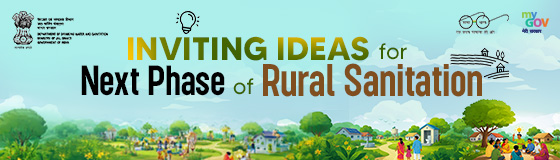
      Inviting Ideas for Next Phase of Rural Sanitation

      Facebook X
      Inviting Ideas for Next Phase of Rural Sanitation
      Start Date 01/08/2026 - 11:49
      End Date 02/10/2026 - 23:45
      Time zone: IST (GMT +5.30 Hrs)
      Login to Participate
      Sector:
      Water & Sanitation
      Created : 1/08/2026
      267
      Total Comments
      178
      Users Participated

      In the last 12 years, SBM(G) has evolved from a sanitation programme into a nationwide movement that has improved public health, enhanced dignity of women, empowered communities and promoted sustainable rural development. Building on the achievement of Open Defecation Free (ODF) status, SBM(G) 2.0 has expanded its focus to sustaining sanitation outcomes through interventions such as Individual Household Latrines (IHHLs), Community Sanitary Complexes (CSCs), Solid and Liquid Waste Management, Plastic Waste Management, Faecal Sludge Management, GOBARdhan, Information, Education and Communication (IEC) and Capacity Building. The current phase of the Mission is scheduled to conclude in March 2027.

      As the Department prepares the roadmap for the next phase of rural sanitation, it seeks ideas from citizens to sustain and strengthen the gains achieved under SBM(G) while addressing emerging challenges related to waste management, resource recovery, environmental sustainability, Operation & Maintenance (O&M) and long-term community ownership of assets and outcomes. Innovative, practical and scalable solutions are required to enhance sanitation service delivery, strengthen waste management systems, promote behavioural change and accelerate the transition towards a circular waste-to-wealth economy. Given that the diversities of rural areas from urban cities, suggestions and ideas, specific to rural scenarios will be highly appreciated. Along with these, with peri-urban areas / villages also growing fast and having characteristics of urban centers, solutions specific for such areas are also being sought.

      The success of SBM(G) has been driven by the spirit of Jan Bhagidari (People's Participation). Citizens, Gram Panchayats, SHGs, youth, Swachhagrahis and other stakeholders have been at the forefront of transforming rural sanitation and their continued participation will remain critical for sustaining these achievements. 

      Accordingly, the Department of Drinking Water and Sanitation (DDWS), Ministry of Jal Shakti in collaboration with MyGov, invites citizens, youth, Gram Panchayats, SHGs, academic and research institutions, development partners and other stakeholders to share their suggestions and ideas for the next phase of rural sanitation programme on the following:

      1. Areas to be taken up (including existing areas where gaps may be remaining)
      2. New technological interventions for SWM, GWM, FSM.
      3. Rural Sanitation 
      4. Solutions for treating pollution in small nallahs/rivulets discharging into rivers in rural areas.
      5. Adoption of solutions based on traditional knowledge and ancient wisdom in new settings for rural India. 
      6. Any other area related to the programme.

      The suggestions received will help and guide the next phase of SBM(G) and contribute to building cleaner, healthier and environmentally sustainable villages that will be strong contributors for achieving the goal of Viksit Bharat@2047.

      Participation Guidelines 

      1. All Citizens, youth (including students), Gram Panchayats & SHGs, academic and research institutions, development partners, NGOs and other stakeholders are invited to contribute ideas for shaping the next phase of rural sanitation and solid-liquid waste management under Swachh Bharat Mission (Grameen).
      2. For detailed information about SBM(G) Phase II, applicants may visit the SBM(G) Phase II operational guidelines available on website of the Department (https://swachhbharatmission.ddws.gov.in). The guidelines can also be assessed through: https://swachhbharatmission.ddws.gov.in/sites/default/files/Guidelines/SBMG%20Phase-II%20Operational%20Guidelines.pdf 
      3. Suggestions may be submitted on any of the major components of SBM(G), including Individual Household Latrines (IHHLs), Community Sanitary Complexes (CSCs), Solid Waste Management, Liquid Waste Management, Plastic Waste Management, GOBARdhan, Faecal Sludge Management, Information, Education and Communication (IEC) and Capacity Building. Global best practices forming the bases of solution, may also duly mentioned and referred.
      4. Participants are encouraged to propose innovative, technology-driven, scientific, managerial, practical, feasible and scalable solutions to address rural sanitation challenges and strengthen long-term sustainability.
      5. Suggestions should focus on supporting the Department of Drinking Water and Sanitation (DDWS), Ministry of Jal Shakti, in developing the roadmap for the next phase of rural sanitation for India.
      6. Participants are required to register on the MyGov platform and submit their suggestions through the prescribed online form.
      Keerivalappil Achuthan Subhas
      Keerivalappil Achuthan Subhas
      3 days 5 hours ago

      The initiatives in the 12 years of SBM(G) have been efficacious & highly commendable. A discernable feature of government initiatives in the social sector has been lacking follow up and reinforcement measures to concretize the social sectoral progress achieved and attendant gains. When newer initiatives get implemented, the previous ones go into oblivious deprecation. That this does not happen to the SMB(G) Mission needs to be ensured. So, the 2nd phase of the Mission may primarily re-visit the phase-1 initiatives, monitor their maintenance and use. The additional infrastructural or maintenance requirements may be provided. The secondary part of phase-2 may again focus on rural hygiene/health and rural literacy education. Further, rural waste management by recycling and reuse of SW/FSW/etc for rural agricultural requirements need to be the focus. By these, we reduce the dependence of our rural farmers on artificial fertilizers. This reduces the financial fertilizer subsidy bill.

      Like 1
      Dislike 0
      • Reply
      Facebook X
      NIKHIL C LABY
      NIKHIL C LABY
      3 days 6 hours ago

      1. India's 2 lakh MT/day wet waste+night soil can produce 20,000 MT Di-Methyl Ether using CSIR-NCL & IIT-Delhi technology, replacing 13,000 MT of LPG—meeting 15% of daily LPG demand. 2. Every panchayath should have a waste collection facility 3. Every District should have a waste management facility- where segregation, processing and transportation to processing and recycling plants are done 4. No facility should be allowed to dispose any waste (treated or untreated) to soil or water sources. Waste management facilities should do it. 5. Event-based waste generation should be handled through prior registration with the corresponding waste collection facility 6. Information radiators of Environmental pollution levels and public waste disposal incidents should be established at every panchayath whose data can also be accessed through web/app by public 7. Waste management awareness should be part of school curriculum

      Like 1
      Dislike 0
      • Reply
      Facebook X
      saumyaprasadrautaraya
      saumyaprasadrautaraya
      3 days 6 hours ago

      Im very glad to share my point of view in rural area sanitation. As a aspirant from my perspective we cannot just blindly move for rural sanitation rather first we should note that why rural area getting more polluted then urban area and also on top of that rural area is less vulnerble for industry setup. The area which consider as a great place in ancient time and we also give example that rural area in ancient time is a noble model for sanitation and cleanliness take theexample of Harappa, Mohenjodaro, Lothal, Dholavira, Rakhigarhi are exceptional example of drainage system and sanitation. We should ask the right question the what can we do for rural sanjtation rather asking the wrong question that why rural are is unhygine. We should focus on; 1. Getting information and take measure 2. Root level disposal and cleanliness approach 3. Incentivise people not in terms of money but in other mode like providing some essential needs

      Like 1
      Dislike 0
      • Reply
      Facebook X
      veldi
      sravan kumar
      3 days 7 hours ago

      Swachh Bharat should be implemented with genuine dedication, not merely as a campaign. Cleanliness requires continuous government action and active public participation. People must be made aware to avoid open defecation, public urination, spitting and littering. Though many public toilets have been constructed, poor maintenance and foul smells remain common, especially at hospitals, bus stations, railway stations and markets. Toilets need regular cleaning, water, sanitation, inspections and a clear maintenance agency. Complaint mechanisms and penalties should ensure accountability. Schools and local communities should promote behavioral change, while citizens should report unhygienic conditions. Success should be measured not by toilets constructed or campaigns conducted, but by clean, functional facilities and lasting behavioral change. Swachh Bharat should become a daily habit, not a temporary campaign.

      Like 1
      Dislike 0
      • Reply
      Facebook X
      Ayushjha_650
      Ayushjha_650
      3 days 9 hours ago

      Namaste Bharat mai ayush jha aaj kuchh baate karne ja raha hu ,gram swachhata, par hamare desh mai yese bahut sare gram hai jaha aabhi tak nagar nigam ka naamo Nishan nahi hai na toilet hai na Nadi saaf hai mera anurodh hai hamare prime minister ji se ki ooh kuchh action le gis se hamara bharat sare jaha se achha Bane kitne gram mai to pine Kai panni Dak saaf nahi hai waha ke bache sab aabhi tak wahi gande paani pi rahe hai jisa ke karan Wahi aage chal kar bimar par gayenge aap kripya kar ke waha Pani ka wewashtha karaye or waha ke bachho ki gaan bachaye or gawo mai nagar nigam ki team ko bheje oor kitne government school mai to khana Kai naam par gande chige khilaye ga rahe hai gisa se bachhe bimar par rahe hai

      Like 1
      Dislike 0
      • Reply
      Facebook X
      GauravSaxena_139
      GauravSaxena_139
      3 days 16 hours ago

      I propose a **Gram Swachhata Utility** model where nearby Gram Panchayats jointly manage rural sanitation services such as waste collection, processing, liquid waste and faecal sludge management through shared resources and professional O&M. The model aims to improve the long-term functioning of existing sanitation infrastructure, reduce costs, strengthen community participation and create sustainable, accountable sanitation services.

      (0.31 MB)
      Like 1
      Dislike 0
      • Reply
      Facebook X
      Harsha veera Karthikeya
      Harsha veera Karthikeya
      3 days 18 hours ago

      मेरे हिसाब से गांवों में स्वच्छता के लिए सिर्फ शौचालय बनाना ही काफी नहीं है, बल्कि उनकी सफाई और maintenance पर भी लगातार ध्यान देना चाहिए। हर ग्राम पंचायत में ऐसी आसान व्यवस्था होनी चाहिए जिससे लोग खराब शौचालय, गंदगी, नालियों या कचरा उठाने की समस्या की जानकारी दे सकें और उसका जल्दी समाधान हो। गीला और सूखा कचरा अलग-अलग इकट्ठा करने की आदत को बढ़ावा देना चाहिए। गीले कचरे से खाद या biogas बनाई जा सकती है और प्लास्टिक जैसे कचरे को recycling के लिए भेजा जा सकता है। इससे गांव साफ भी रहेंगे और कचरे का सही उपयोग भी होगा। गांवों के छोटे नालों और नदियों में जाने वाले गंदे पानी को रोकने के लिए कम खर्च वाले natural treatment systems लगाए जा सकते हैं। साथ ही, युवाओं, SHGs और students को cleanliness और waste management के कामों में शामिल किया जाए। इससे जागरूकता के साथ गांव में रोजगार के अवसर भी बढ़ सकते हैं। मेरे विचार से हर गांव में साल में एक बार “Sanitation Check” होना चाहिए, जिसमें पंचायत और गांव के लोग मिलकर देखें कि शौचालय, कचरा और नालियों की व्यवस्था ठीक चल रही है या नहीं। अगर लोग खुद इसमें

      Like 2
      Dislike 0
      • Reply
      Facebook X
      Sanvi_1285
      Sanvi_1285
      3 days 22 hours ago

      Mere hisaab se rural sanitation ka next phase sirf toilets banane tak seemit nahi hona chahiye. Sabse zaroori baat hai ki har ghar aur har school mein clean toilet, safe drinking water aur proper handwashing facilities available hon. Logon ko hygiene ki importance samjhana bhi utna hi zaroori hai jitna infrastructure banana. Schools, panchayats aur local youth milkar regular cleanliness drives aur awareness campaigns chala sakte hain.Wet aur dry waste ko alag collect karke composting aur recycling ko promote karna chahiye. Rainwater harvesting aur wastewater treatment jaise eco-friendly solutions villages ko aur sustainable bana sakte hain. Technology ka use karke sanitation facilities ki monitoring bhi ki ja sakti hai. Agar government, local communities aur students milkar kaam karein, to har gaon swachh, healthy aur disease-free ban sakta hai. Clean villages sirf better health hi nahi, balki education, tourism aur economic growth ko bhi support karte hain. Swachh gaon = swachh desh!!

      Like 2
      Dislike 0
      • Reply
      Facebook X
      ShikhaGupta_632
      ShikhaGupta_632
      3 days 22 hours ago

      In my view, the next phase of rural sanitation should focus on making cleanliness a community habit, not just a government programme. Every village could have a simple “Clean Village Mission” where households segregate waste, kitchen waste is turned into compost, and recyclable waste is collected regularly. Schools can involve students as young “Swachhata Ambassadors” who spread awareness through creative activities and take these habits home. Local youth and Self-Help Groups can support cleanliness and water-conservation efforts. Small rewards for the cleanest streets or households could encourage participation. When every person feels responsible for their surroundings, sanitation becomes stronger, sustainable and truly people-driven.

      Like 1
      Dislike 0
      • Reply
      Facebook X
      biruduveeraiah_1
      biruduveeraiah_1
      3 days 22 hours ago

      GRAM-SWACHH 360°: A Community-Owned Roadmap for Sustainable Rural Sanitation Swachh Bharat Mission (Grameen) has transformed rural sanitation by improving toilet access, reducing open defecation and increasing awareness about cleanliness and hygiene. The next phase should build on these achievements by shifting the focus from construction of sanitation infrastructure to continuous service delivery, maintenance, waste recovery, environmental protection and long-term community ownership. I propose a comprehensive approach called GRAM-SWACHH 360°, designed specifically for the diverse conditions of rural India and rapidly developing peri-urban villages. 1. Sanitation as a Continuous Rural Service Sanitation should be treated as an essential public service rather than a one-time infrastructure activity. Every Gram Panchayat should prepare an annual Village Sanitation Plan covering toilets, Community Sanitary Complexes, solid waste, greywater, plastic waste, faecal sludg

      (0.07 MB) (0.06 MB)
      Like 1
      Dislike 0
      • Reply
      Facebook X
      • First page « पहला
      • Previous page ‹ पिछला
      • …
      • पृष्ठ 2
      • पृष्ठ 3
      • पृष्ठ 4
      • पृष्ठ 5
      • Current page 6
      • पृष्ठ 7
      • पृष्ठ 8
      • पृष्ठ 9
      • पृष्ठ 10
      • …
      • Next page अगला ›
      • Last page आखरी »
      Please Log In to submit a comment.
      शामिल हों
      • समूह
      • कार्य
      • चर्चा करें
      • ब्लॉग
      • जनमत/सर्वेक्षण
      • वार्ता
      • क्विज़
      • MG प्राइम
      • अभियान
      • शपथ
      • पॉडकास्ट
      • मीडिया
      • पत्रिकाएँ
      जानें
      • माईगव: अवलोकन
      • माईगव से संबद्ध करें
      • माईगव के साथ काम करें
      • सर्कुलर
      • पल्स न्यूजलेटर
      • टेंडर्स
      • साप्ताहिक समाचार पत्र
      • Meity डैशबोर्ड
      • सेक्टर्स
      • कौशल
      • रूचि के क्षेत्र
      • आयु वर्ग
      • राष्ट्रीय कार्यक्रम
      • आर्काइव साइट्स
      सहायता और समर्थन
      • संपर्क करें
      • FAQ
      • प्रतिक्रिया
      • मदद
      • हमसे जुड़ें
      • सार्वजनिक शिकायत
      • साइट मैप
      • नियम एवं शर्तें
      • आधार का इस्तेमाल
      • वेब सूचना प्रबंधक
      • ICC
      • MyGov सोशल
      • पॉइंट्स और बैज्स
      • वेबसाइट की पॉलिसी
      उपयोगी लिंक्स
      • MyGov Quiz MyGov Quiz
      • Transforming India ट्रांसफॉर्मिंग इंडिया
      • MyGov Innovation माईगव इनोवेशन
      • MyGov Pledge माईगव संकल्प
      • MyGov Blog माईगव ब्लॉग
      • Self4Society सेल्फ4सोसायटी
      • Campus Program कैंपस कार्यक्रम
      • MyGov Saathi साथी
      Follow us
      Twitter Twitter 33.11 + Lakh Followers Facebook Facebook 15.14 + Lakh Followers Instagram Instagram 30.73 + Lakh Followers YouTube YouTube 7.43 + Lakh Subscribers LinkedIn LinkedIn 1.63 + Lakh Followers Messenger Messenger 1.60 + Lakh Followers WhatsApp WhatsApp 910.05 + Lakh Followers DailyHunt DailyHunt 7.2 + K Followers Public Public 85.5 + K Followers ShareChat ShareChat 82.22K Followers Snapchat Snapchat View All
      QR Code

      Download the MyGov Mobile App Join us in building a New India on the move.

      App Store Play Store
      NIC logo

      © Content owned, updated and maintained by the MyGov Cell. This website belongs to MyGov, Ministry of Electronics & Information Technology, Government of India.
      Platform is designed, developed and hosted by National Informatics Centre.

      CQW - MyGov certificateCertified Quality Website
      • Meity
      • Digital India
      • National Portal of India
      • Data Portal

      Copyright © MyGov 2014

      mygov-1 - Last Updated: August 12, 2026
      Top
      This website uses cookies to provide a better user experience.
      By clicking accept, you agree to the policies outlined in the Cookie Settings.