
Home | MyGov

Accessibility
Accessibility Tools
Color Adjustment
Text Size
Navigation Adjustment
Screen Reader iconScreen Reader

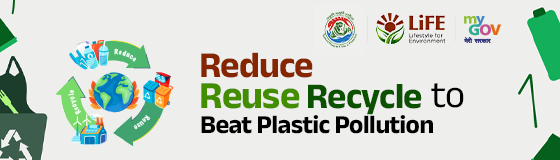
Reduce Reuse Recycle to Beat Plastic Pollution

Reduce Reuse Recycle to Beat Plastic Pollution
Start Date :
Jun 03, 2025
Last Date :
Jul 03, 2025
18:30 PM IST (GMT +5.30 Hrs)
Submission Closed

The Ministry of Environment, Forest and Climate Change (MoEF&CC) in collaboration with MyGov is organising this discussion to invite participants to share their journeys towards ...

The Ministry of Environment, Forest and Climate Change (MoEF&CC) in collaboration with MyGov is organising this discussion to invite participants to share their journeys towards reducing plastic waste and contributions in reducing plastic pollution. Participants are encouraged to discuss their challenges, successful actions, and alternatives they have adopted in their daily lives to beat plastic pollution.

Reset
Showing 890 Submission(s)
Ushamolla Shyam
Ushamolla Shyam 9 months 3 weeks ago
"Reduce, Reuse, Recycle" is a powerful message to save our Earth. It teaches us how to take care of the environment in simple ways. Reduce means using less. We can reduce waste by carrying our own bags, using less plastic, and saving electricity and water. Reuse means using things again instead of throwing them away. Old clothes, bottles, and boxes can be reused in creative ways. This helps reduce pollution and saves money. Recycle means turning old things into new items. Paper, plastic, metal, and glass can be recycled to make useful products again. This saves natural resources and energy. By following these three steps, we can keep our planet clean and green. Every small action matters. If each one of us cares, the Earth will be a better place for all.
Naitik Verma
Naitik Verma 9 months 3 weeks ago
Reduce: This involves minimizing the amount of waste generated in the first place. This can be achieved by: Buying only what is needed, Choosing products with minimal packaging, and Conserving resources like water and energy. 2. Reuse: This means using items multiple times, either for their original purpose or for a different purpose. Examples include: Using reusable shopping bags, Refilling water bottles, Donating or selling unwanted items instead of throwing them away, and Finding new uses for old items. 3. Recycle: This involves converting waste materials into new products. Examples include: Recycling paper, plastic, and metal. Composting food and yard waste. Properly disposing of materials to be recycled.
kunal kishore
kunal kishore 9 months 3 weeks ago
Plastic is a very big concern for our country. some suggestion has been given for resolve this problem. 1 Always use cloth bag for shopping and other related work. 2 segregate plastic and other waste material for their proper recycling. 3 Eco friendly bag is a best option for being goods from market. 4 Plastic awareness campaign has been started for their negative impact on human being life cycle. 5 community plastic recycle plant should be needed for their proper treatment. 6 Plastic tax should be needed for discourage their use.
arushi
arushi 9 months 3 weeks ago
To effectively fight plastic pollution, I suggest a practical approach that includes education, community action, and innovation: 1. Start from Schools: Make plastic-free habits a part of school activities—like "No Plastic Week", eco-club competitions, and DIY projects using waste materials. 2. Local Refill Stations: Set up small plastic-free refill kiosks in every town where people can refill household items like shampoo, detergents, and oils using reusable containers. 3. Plastic Bank Model: Introduce local “Plastic Banks” where citizens can deposit plastic waste in exchange for small rewards or discounts at grocery stores. This will motivate people to recycle. 4. Ban Micro-Plastics in Products: Create stricter rules to ban microplastics in cosmetics, cleaners, and textiles which are invisible but dangerous to the environment. 5. Reusable Packaging for E-commerce: Encourage e-commerce companies to use cloth bags or paper packaging instead of bubble wrap and plastic tapes. 6
Sanjay Raghunath sonawane
Sanjay Raghunath sonawane 9 months 3 weeks ago
Plastic pollution ( problems) Author-Sanjay raghunath sonawane. Plastic pollution is dangerous for human and cattles. There are many pollution in the environment. Water pollution, air pollution, foods pollution, soil pollution, Plastic pollution. Plastic never dissolution in the nature. So many cattles eating the Plastic and killed because of Plastic pollution. Many Plastic pollution is troubling to the Farmers for farming. Plastic pollution is dangerous on the seaface and rivers banks. Many people never use cotton cloths bags for shopping so that plastic pollution are growing. In future government will taking strictly action on plastic companies . Plastic growing chemical burning air in the environment. So many deaseas are growing. Rivers flood growing because of Plastic pollution. In big cities plastic pollution big problems in the monsoon season. Water level are growing and flood problems always dangerous for the human.
Prantika Tiwari
Prantika Tiwari 9 months 3 weeks ago
To reduce is to question our habits. Why take plastic bags when we can carry a cloth one? Why buy packaged water when we can carry our own bottle? Every time we refuse single-use plastic, we prevent waste before it is created. This simple “no” is not just a refusal—it’s a rebellion against a throwaway culture. To reuse is to value things. Our ancestors reused almost everything, not out of compulsion but out of respect for resources. When we reuse a jar, a container, or a bag, we give plastic a longer life and reduce the need to create more. It’s sustainable living, and it’s smart living. To recycle is to close the loop. It is not a perfect solution, but it’s an essential one. Recycling saves energy, reduces pollution, and keeps plastic out of landfills and oceans. But it only works when we segregate waste, follow rules, and support recycling industries. Many believe individual efforts don’t matter. But imagine if every single person on Earth reused ,recycled .