Start Date
01/09/2026 - 10:00
End Date
27/09/2026 - 23:45
Time zone: IST (GMT +5.30 Hrs)
38
Total Submissions in this Task
26
Approved
12
Under Review
Created: 27/08/2026
56 minutes 56 seconds ago
BHAGAT SINGH JI IS WILL BE BACK TO BUILD NEW INDIA BHARAT HINDUSTAN WITH AS NOBLE HUMAN MILLIONS BILLIONS TRILLIONS OF INDIANS IN WORLD IN INDIA JAI HIND BHARAT MATA KI JAI HO VANDEY MATARAM
Like
0
Dislike
0
2 hours 18 minutes ago
~The Legacy of a Mind That Refused to Be Silent
Bhagat Singh is remembered as a revolutionary, but to me, his greatest legacy is not simply the courage with which he faced the British Raj. It is the courage to think.
He belonged to a generation that inherited an India struggling for freedom, yet his vision went beyond merely replacing one ruler with another. He questioned injustice, challenged established ideas, read deeply, wrote passionately, and believed that a free nation must also be a nation of thinking and aware citizens.
That is what makes his legacy feel alive even today.
We often remember heroes through statues, photographs and dates in history books. But Bhagat Singh deserves to be remembered as a young person who refused to accept the world exactly as it was. He reminds us that patriotism is not only about loving one's country; it is also about having the courage to ask whether our country can become better—and then having the responsibility to contribute towards making it so.
His life also reminds me that courage does not always mean standing without fear. Sometimes courage means standing by an idea when it would be easier to remain silent.
More than a century later, the questions he raised about justice, equality, education, freedom of thought and the responsibility of young people still matter. His greatest memorial, therefore, cannot merely be built from stone. It must exist in the minds of people who continue to question, learn, think critically and work for a better society.
Bhagat Singh's life was short, but the questions he left behind are not.
Perhaps that is why his legacy continues—not because history refuses to forget him, but because every generation still finds something in his thoughts worth remembering.
Like
1
Dislike
0
3 hours 5 minutes ago
What Bhagat Singh Means to Me
Whenever I hear the name Shaheed Bhagat Singh, the first words that come to my mind are courage, sacrifice and patriotism. But as I have grown older, I have come to understand that his legacy is much bigger than the story of how he sacrificed his life for India.
What inspires me most about Bhagat Singh is his courage to think differently. He was not afraid to question, learn and form his own opinions. For me, this is one of the most important lessons his life offers to young Indians today.
We live in a time when information is everywhere, especially through social media. We constantly see opinions, trends and different versions of the truth. In such an environment, thinking independently, asking questions and understanding an issue before forming an opinion are important responsibilities.
Bhagat Singh also reminds me that loving our country is not only about remembering our freedom fighters on special occasions. Patriotism can be expressed through everyday actions—being responsible, respecting others, learning continuously, standing against injustice and contributing positively to society.
His life also teaches us that age should never become an excuse for not making a difference. He was very young, yet his thoughts and actions continue to influence generations.
For me, remembering Bhagat Singh means more than remembering a revolutionary from history. It means remembering the values of courage, curiosity, responsibility and the willingness to stand for what is right.
India today is moving forward in many ways, and the best way to honour the sacrifices of our freedom fighters is to contribute to that progress. We may not be able to change history, but we can certainly shape the future.
That, to me, is the legacy of Shaheed Bhagat Singh—not just to remember his sacrifice, but to carry forward his spirit of courage and thought.
Like
2
Dislike
0
3 hours 52 minutes ago
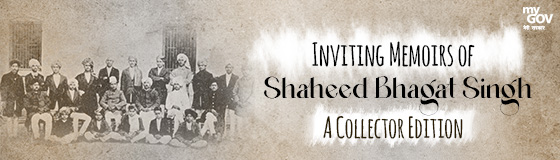
# Inviting Memoirs of Shaheed Bhagat Singh – A Collector’s Edition
**Shaheed Bhagat Singh** remains one of the most inspiring figures in India’s freedom struggle. His courage, patriotism, intellectual depth, and unwavering commitment to the cause of independence continue to inspire generations. The proposed **“Inviting Memoirs of Shaheed Bhagat Singh – A Collector’s Edition”** seeks to preserve and present the memories, writings, ideas, and contributions of this legendary revolutionary in a meaningful and enduring form.
Born on **28 September 1907**, Bhagat Singh grew up in an environment deeply influenced by India’s freedom movement. From an early age, he developed a strong sense of patriotism and a deep understanding of the political and social conditions prevailing under British rule. He believed that true freedom was not limited to political independence but also required social equality, justice, and the empowerment of the people.
Bhagat Singh’s journey as a revolutionary was marked by several significant events. His association with the **Hindustan Socialist Republican Association (HSRA)** reflected his commitment to a broader vision of an independent and socially just India. His participation in the protest against the **Simon Commission**, the subsequent death of Lala Lajpat Rai, and the Central Legislative Assembly incident became important chapters in the history of India’s freedom struggle.
However, Bhagat Singh was much more than a revolutionary who took up arms. He was an avid reader, thinker, writer, and political philosopher. His writings demonstrated his views on nationalism, socialism, religion, youth participation, and social transformation. His essay **“Why I Am an Atheist”** and his letters from prison provide valuable insight into his intellectual development and his understanding of society and politics.
The **Collector’s Edition** can bring together rare photographs, archival documents, letters, writings, newspaper clippings, historical timelines, and personal accounts associated with Bhagat Singh. It can also include carefully researched narratives about important milestones in his life, allowing readers to understand the person behind the iconic image of the revolutionary.
A significant section may be dedicated to his final days in prison, including his correspondence, thoughts, and the circumstances surrounding his execution on 23 March 1931, when Bhagat Singh, along with Shivaram Rajguru and Sukhdev Thapar, was executed by the British government. The day is commemorated as Shaheed Diwas in remembrance of their sacrifice.
The objective of this initiative is not merely to commemorate Bhagat Singh but to preserve his intellectual and historical legacy for future generations. By presenting authentic archival material alongside accessible explanations, the collection can encourage young Indians to explore the history of the freedom movement and understand the values of courage, sacrifice, critical thinking, patriotism, and social responsibility.
The proposed Collector’s Edition can serve as a valuable resource for students, researchers, historians, educators, libraries, museums, and citizens. It can also contribute to the preservation of India's cultural and historical heritage by bringing together important materials related to one of the country's most celebrated freedom fighter.
“Inviting Memoirs of Shaheed Bhagat Singh – A Collector’s Edition” is envisioned as a tribute to a young revolutionary whose life, ideas, and sacrifice became an enduring symbol of India's struggle for freedom. By preserving his memories and making his writings and historical journey accessible, the initiative can ensure that Bhagat Singh's legacy continues to inspire future generations—not only to remember his sacrifice, but also to reflect upon his ideals and vision for a just and progressive India.
Like
0
Dislike
0
3 hours 53 minutes ago
Bhagat Singh: A Legacy That Teaches Us to Think
Whenever we hear the name Shaheed Bhagat Singh, we often think of courage, sacrifice and patriotism. His photograph with the iconic hat has become one of the most recognisable images of India’s freedom struggle. But for me, Bhagat Singh’s legacy goes far beyond the story of a young revolutionary who gave his life for the country. What makes him truly inspiring is the way he thought, questioned and stood firmly by his beliefs.
Bhagat Singh was remarkably young when he became a part of the freedom movement, yet his understanding of society and politics was far beyond his years. He did not simply accept ideas because they were popular or because someone in authority presented them as truth. He read extensively, questioned existing systems and developed his own understanding of freedom and justice. This aspect of his personality is especially relevant to young people today.
Growing up, I had always heard Bhagat Singh’s name in the context of his sacrifice. However, as I learnt more about his writings and ideas, I realised that his contribution was not limited to fighting British rule. He believed that true freedom should mean more than merely replacing one government with another. It should also involve creating a society based on equality, justice and dignity.
One of the qualities I admire most about him is his courage to question. In today's world, we are surrounded by information and opinions. Social media constantly tells us what to believe, what to support and what to oppose. In such an environment, thinking independently can itself be an act of courage. Bhagat Singh reminds us that patriotism should not mean blindly agreeing with everything around us. It can also mean caring enough about our country to question its problems and work towards improving it.
His famous idea that revolution is not merely about violence but about the transformation of society makes his legacy even more meaningful today. The challenges India faces have changed since his time, but the need for responsible and aware citizens remains. Education, equality, social justice, freedom of thought and the willingness to stand against injustice are values that continue to matter.
I also believe that Bhagat Singh teaches us something important about youth. Young people are often told that they are inexperienced and should wait before trying to make a difference. Bhagat Singh's life challenges that idea. He showed that age does not determine the strength of one's convictions. What matters is awareness, courage and the willingness to take responsibility.
For me, remembering Bhagat Singh is therefore not simply about remembering how he died at the age of twenty-three. It is about remembering how he lived—with conviction, curiosity and an unwavering commitment to what he believed was right.
His sacrifice gave India a symbol of courage, but his writings gave us something even more valuable: the responsibility to think.
Years have passed since Bhagat Singh walked through the streets of colonial India, yet his questions remain relevant. What kind of society do we want to build? What does true freedom mean? Are we willing to speak up when something is unjust? And, most importantly, are we willing to think for ourselves?
Perhaps the best tribute we can give Shaheed Bhagat Singh is not merely to remember his name, but to carry forward the spirit of questioning, learning and responsibility that defined him.
His life ended young, but the ideas he left behind continue to live—and it is our responsibility to keep them alive.
(0.15 MB )
Like
0
Dislike
0
3 hours 56 minutes ago
Shaheed Bhagat Singh: A Legacy Beyond Time
Shaheed Bhagat Singh is remembered not merely as a revolutionary who fought for India’s independence, but as a young thinker whose courage, convictions, and ideas continue to inspire generations. What makes his legacy particularly remarkable is that his contribution went beyond acts of resistance. He encouraged people to question injustice, think independently, and imagine a society based on equality, freedom, and dignity.
Bhagat Singh’s life reminds us that patriotism is not simply about loving one’s country; it is also about having the courage to stand up for what is right. At a remarkably young age, he demonstrated extraordinary determination and a willingness to sacrifice his own comfort and future for a larger cause. His commitment to India’s freedom reflected a deep sense of responsibility towards the nation and its people.
What inspires me most about Bhagat Singh is his intellectual courage. He was not someone who accepted ideas simply because they were traditionally followed. He read extensively, reflected deeply, and developed his own understanding of society, politics, religion, and freedom. His famous emphasis on thinking and questioning remains highly relevant today. In an age where information is available everywhere, the ability to distinguish between truth and misinformation and to form independent opinions is more important than ever.
Bhagat Singh also represents the power of youth. His journey demonstrates that age does not determine the impact a person can have on society. Young people today may not face the same circumstances that Bhagat Singh faced, but they have their own responsibilities. Education, social awareness, responsible citizenship, respect for others, and the courage to speak against injustice are meaningful ways of contributing to the country.
His vision also encourages us to think about the kind of India we wish to build. A progressive nation cannot be created through economic development alone. It requires equality, education, social justice, scientific thinking, and respect for every individual. Bhagat Singh’s belief in a better and more equitable society therefore remains meaningful even decades after independence.
For me, remembering Bhagat Singh is not limited to remembering a chapter in a history textbook. It is about understanding the values behind his life and applying them to the present. His courage teaches us to face challenges without fear, his intellectual curiosity teaches us to question and learn, and his dedication teaches us to place larger social responsibilities above personal interests.
The greatest tribute to Shaheed Bhagat Singh would therefore be to keep his ideas alive—not merely through commemorations, photographs, or slogans, but through our actions. Every time we choose knowledge over ignorance, courage over silence, equality over discrimination, and responsibility over indifference, we carry forward a small part of the legacy he left behind.
Bhagat Singh may have belonged to another era, but his questions, ideals, and vision continue to speak to the present. His life reminds us that true legacy is not measured only by the years a person lives, but by the ideas they leave behind and the generations they continue to inspire.
Like
0
Dislike
0
3 hours 57 minutes ago
Shaheed Bhagat Singh was one of India’s most inspiring freedom fighters. Born on 28 September 1907 in Banga, Punjab, he grew up in a family deeply connected with India’s freedom movement. From a young age, he was strongly influenced by the struggle against British rule and developed a deep love for his country. He believed that freedom required courage, sacrifice, education, and the power of ideas.
Bhagat Singh became involved in the revolutionary movement as a young man and worked with other freedom fighters who shared his vision of an independent India. He is remembered for his role in the Central Legislative Assembly bombing of 1929, which he and Batukeshwar Dutt carried out to protest colonial laws; they deliberately used non-lethal devices and remained at the scene to face arrest. During his imprisonment, Bhagat Singh continued reading, writing, and expressing his political and social ideas.
His courage and conviction made him a powerful symbol of India’s freedom struggle. Bhagat Singh, along with Shivaram Rajguru and Sukhdev Thapar, was executed on 23 March 1931. He was only 23 years old. His life remains a reminder that a young person’s ideas, courage, and commitment can leave a lasting impact on a nation.
His legacy continues to inspire generations to think boldly, question injustice, stand for their principles, and contribute towards building a stronger and more progressive India.
Like
0
Dislike
0
4 hours 2 minutes ago
Bhagat Singh (1907–1931) was one of the most influential revolutionaries of India's freedom struggle. He became famous not only for his revolutionary actions but also for his ideas about independence, socialism, secularism, and resistance to colonial rule.
Like
1
Dislike
0
4 hours 3 minutes ago
IN THE MEMORY OF SHAHEED BHAGAT SINGH 28 SEPT 1907 – 23 MARCH 1931 A LEGEND WHO LIVED FOR THE NATION AND DIED FOR ITS FREEDOM “They may kill me, but they cannot kill my ideas. They can crush my body, but they will not be able to crush my spirit.” “Revolution is an inextinguishable desire of mankind.” — Bhagat Singh HE DID NOT JUST DREAM OF A FREE NATION,
HE WORKED,
HE FOUGHT,
HE SACRIFICED.
And smiled in the face of death for the love of his motherland.
A TRUE REVOLUTIONARY WHO BELIEVED IN
KNOWLEDGE, THOUGHT AND ACTION
HIS COURAGE WAS HIS WEAPON.
HIS LOVE FOR INDIA WAS HIS RELIGION.
“IT WAS TO MAKE THE DEAF HEAR.”
“LONG LIVE REVOLUTION!”
LEGENDS NEVER DIE,
THEY LIVE FOREVER IN THE HEARTS OF A NATION.
LET US REMEMBER HIS SACRIFICE
BY BUILDING THE NATION HE DREAMED OF.
(0.57 MB )
Like
0
Dislike
0
4 hours 19 minutes ago
Shaheed Bhagat Singh was a brave freedom fighter and a great thinker.
He stood firmly against British rule and dreamed of a free India.
He believed in equality, justice, knowledge and the power of ideas.
His courage and dedication continue to inspire generations.
His life remains a symbol of patriotism, sacrifice and determination.
Like
1
Dislike
0
Please
Log In
to submit a comment.